Canada, renowned for its vast landscapes, diverse culture, and robust economy, presents a favorable environment for skilled professionals globally. Among various occupations, welding emerges as a crucial trade that significantly contributes to infrastructure development, manufacturing, and innovation.
Canada’s economy is distinguished by stability, innovation, and an abundance of natural resources. The diverse industrial landscape, encompassing natural resources, manufacturing, technology, and construction, perpetuates a high demand for skilled workers. Welders play a vital role in these industries, fabricating metal structures and products that drive national progress. The sustained economic growth and evolving infrastructure needs ensure a thriving job market for qualified welding professionals.
Welder Job Description in Canada
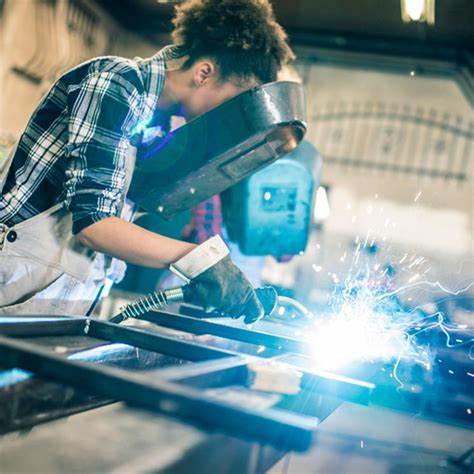
Welders in Canada operate welding equipment to fuse ferrous and non-ferrous metals. Their responsibilities include:
- Reading and interpreting blueprints or welding process specifications.
- Using manual or semi-automatic welding techniques (such as gas tungsten arc welding, gas metal arc welding, and flux-cored arc welding) to join metal segments.
- Operating flame-cutting, brazing, and soldering equipment.
- Repairing worn parts of metal products by adding extra layers through welding1.
Required Skills and Qualifications
To become a welder in Canada, you typically need:
- Completion of secondary school.
- A three-year apprenticeship program or a combination of work experience (over three years) and relevant college or industry courses.
- Trade certification (mandatory in Alberta, voluntary in other provinces and territories).
- Red Seal endorsement upon successful completion of the interprovincial Red Seal examination2.
Duties and Responsibilities
Welders perform various tasks, including:
- Reading blueprints and welding process specifications.
- Operating welding equipment (manual or semi-automatic).
- Repairing metal products.
- Assisting with maintenance and repair of welding equipment1.
- Ensuring safety protocols and adhering to production schedules3.
Industries Where Welders Work
Welders are employed in diverse sectors:
- Construction: Joining metal structures like bridges, buildings, and pipelines.
- Manufacturing: Vital role in machinery, equipment, and consumer goods production.
- Oil and Gas: Welding pipelines and related structures.
- Automotive and Aerospace: Contributing to vehicle and aircraft manufacturing4.
Work Conditions and Capabilities
Welders work in various environments:
- Indoors: Factories, workshops, and construction sites.
- Outdoors: Construction projects, oil fields, and shipyards.
- Physical Demands: Bending, lifting, and standing for extended periods.
- Attention to Detail: Ensuring precise welds and safety precautions5.
Remuneration and Benefits
Welders’ salaries vary based on experience, location, and industry. On average, they earn around CAD 50,000 to 70,000 per year. Benefits may include health insurance, retirement plans, and paid time off4.
Remember, welding is both an art and a science—a fusion of skill and creativity that shapes our world!
CLICK HERE TO APPLY!!!